I’m Back, like I never left…

Life happened, needed to cool the engines down a bit. But I’m officially back, and since we wanna kick things off with a bang, there’s only one place to begin:
The moment humans decided driving normally was a little too risk free.
We’re going back to where racing started — the who, the where, the how, and the beautifully chaotic why behind motorsport.
The History of Car Racing
The First Rule of Cars: Someone Will Race Them
The automobile was barely invented before people started competing with it.
In the late 1800s, cars weren’t sleek machines. They looked like horseless carriages with attitude problems. Some ran on steam, others on electricity, and many broke down if you looked at them wrong.
But the moment two cars existed in the same place, one question appeared:
“Which one is faster?”
And just like that, racing was inevitable.
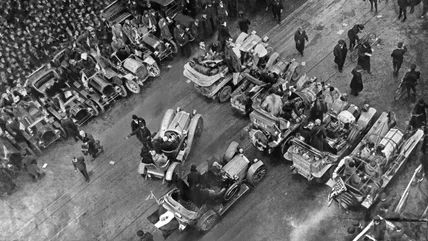
1894 — The World’s First Car Race (France Starts Everything)
The first official automobile race happened on July 22, 1894, organized by a French newspaper called Le Petit Journal.
Yes — motorsport was literally invented for headlines.
The Paris–Rouen Race
-
Distance: 126 km (78 miles)
-
Route: Paris to Rouen
-
Goal: Prove cars were actually useful
This particular race wasn’t entirely about speed.
The judges cared about:
-
Reliability
-
Safety
-
Ease of driving
-
Mechanical sanity (a rare quality back then)
Gasoline-powered cars ultimately proved more practical than steam vehicles — unknowingly deciding the future of transportation.
Motorsport had officially been born.
The First Racing Drivers Were Basically Mad Scientists
Early racers weren’t athletes, they were inventors testing machines that they barely trusted.
Imagine racing something you personally built… knowing it might fall apart halfway.
Some of these early legends included:
-
Émile Levassor — drove nonstop for hours and helped pioneer modern car layouts.
-
René Panhard — turned engineering ideas into racing success.
-
Count de Dion — wealthy enthusiast and early motorsport promoter.
These men weren’t after trophies, they just wanted to be sure the cars actually worked. Basically, high-risk experiments.
The City-to-City Era
After the first race succeeded, Europe said:
“Let’s do more… but faster.”
Soon, massive road races connected entire cities:
-
Paris–Bordeaux–Paris (1895)
-
Paris–Berlin (1901)
-
Paris–Madrid (1903)
Cars raced through villages, farms, and public roads with almost zero safety rules. It’s also important to remember that all the races that happened during this time were done with cars that had no brakes and a lot of other safety mechanisms we see in cars today. So these men were raw-dogging it knowing they might be on a one-way trip to heaven.
What could possibly go wrong?
Unfortunately — everything.
The 1903 Paris–Madrid race became so dangerous that authorities stopped it midway after serious accidents. Racing had outgrown public roads.
Motorsport needed a safer home.
Enter the Racetrack (1907 — Racing Grows Up)
After the deadly chaos of early city-to-city races, one thing became clear, racing needed boundaries.
In 1907, Britain introduced a revolutionary idea that would change motorsport forever — a place built specifically for racing.
Brooklands: The World’s First Purpose-Built Racetrack
Located in Surrey, England, Brooklands wasn’t just a road. It was a massive banked circuit engineered for speed, testing, and competition.
For the first time in history:
-
Fans watched safely from grandstands
-
Lap times were properly measured
-
Events followed structured organization
-
Racing became spectator entertainment
Motorsport stopped being a risky experiment on public roads and officially became a sport.
The modern race weekend had been born.
America Joins the Party — And Thinks Bigger (1909)
While Europe refined racing, the United States embraced it with typical ambition: make it faster, louder, and larger.
Indianapolis Motor Speedway
Built in Indiana in 1909, the Indianapolis Motor Speedway quickly became one of the most important venues in motorsport history.
Just two years later, in 1911, it hosted the first Indianapolis 500 — a race that would grow into one of the most prestigious events in the world.
American racing developed its own identity:
-
Longer endurance-focused races
-
Massive spectator crowds
-
Cars built to survive punishment as much as achieve speed
These ideas laid the cultural and technical groundwork for American stock car racing — and eventually NASCAR.
Europe Creates the Grand Prix (1906–1920s)
Even before permanent circuits fully spread, Europe had already begun shaping organized international competition.
In 1906, France hosted the first official Grand Prix, introducing a new philosophy: racing as national and technological rivalry.
Manufacturers competed not just to win races, but to prove engineering superiority.
This era introduced concepts still central today:
-
Factory-backed teams
-
Professional drivers
-
Manufacturer rivalries
-
National pride tied to performance
Fans began choosing allegiances — a tradition that lives on every Formula 1 weekend.
War Pauses Racing — But Accelerates Innovation
The First and Second World Wars temporarily stopped motorsport, but paradoxically made it more advanced.
Military engineering pushed technology forward at an unprecedented pace:
-
Stronger lightweight metals
-
More powerful and reliable engines
-
Early aerodynamic research
-
Improved fuels and mechanical durability
When racing resumed after World War II, cars returned dramatically transformed — faster, more sophisticated, and increasingly professional.
The stage was set for modern motorsport.
The Explosion of Modern Motorsport (1940s–1950s)
The mid-20th century didn’t just restart racing — it defined the disciplines we still follow today.
1948 — NASCAR Is Founded
In the United States, stock car racing was formalized into the National Association for Stock Car Auto Racing (NASCAR), inspired partly by modified cars used by Prohibition-era bootleggers.
Oval racing became fast, aggressive, and deeply connected to American car culture.
1950 — Formula One Begins
The FIA launched the first Formula One World Championship, unifying Grand Prix events into a global series and establishing the pinnacle of open-wheel racing.
Motorcycle Racing Evolves
Motorcycle Grand Prix competition matured into what we now know as MotoGP, showcasing extreme precision and bravery on two wheels.
Motorsport had diversified into distinct worlds:
-
Open-wheel precision racing
-
Stock car battles
-
Rally endurance across terrain
-
Long-distance endurance racing
-
Motorcycle competition at the edge of physics
Racing Becomes the Laboratory for Road Cars
As competition intensified, racetracks turned into testing grounds for innovation.
Many technologies now considered normal were perfected under racing pressure:
-
Disc brakes
-
Aerodynamic body design
-
High-performance tire compounds
-
Hybrid power systems
-
Safety cages and crash structures
Racing wasn’t separate from everyday driving anymore.
It became the automotive industry’s fastest research laboratory — operating at over 300 km/h.
From Dusty Roads to Global Spectacle
What began in 1894 as a newspaper publicity experiment has evolved into a global industry watched by millions every weekend.
The machines are more advanced.
The tracks are safer.
The stakes are higher.
But the core spirit remains unchanged.
Drivers still chase limits.
Engineers still chase speed.
Fans still argue endlessly about who’s the greatest.
And more than a century later, motorsport continues to chase the same timeless question:
Who’s faster?